

Ambient guitar rarely depends on gain alone. Most of the difference comes from space. Switch on the wrong reverb and your sound can become flat, muddy, or too present in the high end.
Choose the right one, though, and you get that floating atmosphere where chords linger, volume swells bloom open, and single notes almost feel synth-like. So the question of which reverb works for ambient guitar is not a side issue, but often the core of your setup.
Which reverb for ambient guitar actually works?
Not every reverb is automatically suitable for ambient guitar. A short room or subtle spring can sound musical, but usually does not provide the width and sustain ambient playing calls for. In practice, you often end up with hall, plate, shimmer, and larger modulated reverb algorithms. These give you more tail, more movement, and above all more space between your attack and the decay.
Still, bigger is not always better. An extremely long decay can sound impressive on its own, but in a band setting or recording it can quickly become cluttered. Especially if you are already using delay, modulation, or a lot of bass in your signal. The best ambient reverb is therefore usually not the most extreme one, but the one that lingers without completely pushing away the attack of your playing.
The reverb types that make the most sense
Hall for width and depth
If you had to name one type that almost always works for ambient, it would be hall. Hall reverb gives you a spacious, natural tail and remains useful from subtly spacious to extremely expansive. For open chords, e-bow, swells, and clean single notes, this is often the safest starting point.
A good hall also holds up well with delay before or after it. That makes it practical as a base reverb on a board that needs to handle multiple ambient layers. Just watch the low end and low mids. Some hall settings sound big, but take up too much room once you play lower parts or let multiple notes ring out.
Plate if you want more definition
Plate is often associated with shorter, brighter reverbs, but for ambient a large plate can be surprisingly strong. Especially if you want notes to remain recognisable within a spacious soundscape. Plate usually has a little more focus in the upper harmonics and less of the woolly character that some hall settings can have.
If you play with delays, arpeggios, or lightly distorted ambient textures, plate is often easier to control. You get space without everything immediately collapsing into itself.
Shimmer for a pronounced ambient sound
If you immediately think of cinematic pads and inflated upper harmonics, shimmer is the obvious choice. A pitch-shifted signal, often an octave up, is added to the reverb tail. That creates the familiar glossy, almost choir-like layer.
Shimmer works very well for intros, soundscapes, and solo ambient playing. But it is also an effect that can quickly become too much. In a mix it can become dominant, and live the high end can start to build up. If you choose shimmer, controllability is more important than spectacle. A subtle shimmer that stays behind your dry signal is usually more usable than an algorithm that immediately demands all the attention.

Modulated reverb for movement
Ambient often sounds better when the reverb is not completely static. Light modulation in the tail adds movement and prevents long notes from becoming too straight and clinical. That is why modulated hall and cloud-like modes are so popular.
This type of reverb works well with slow playing, swells, and drones. The sound feels more alive and wider, without necessarily having to add extra chorus or vibrato. Here too, though, too much modulation can make your tone sound unstable or floaty in a way that is not always useful.
What you really need to watch for in an ambient reverb
The name of the algorithm does not tell the whole story. For ambient guitar, a few practical features are more important than marketing terms.
Decay is the first. You want enough length to let chords and notes carry, but not so much that every phrase falls over the next one. For solo playing at home, it can be longer and more extreme. For use with a band, drums, or bass, a reverb with control over decay and tone shaping is usually the smarter choice.
Pre-delay is just as useful. It creates some space between your dry attack and the reverb tail. That makes your playing clearer, especially with chord work or melodic lines. Without pre-delay, a large ambient reverb can sound beautiful, but completely blur your attack.
EQ or tone control is another point that is often underestimated. An ambient reverb without control over the high or low end can be difficult to tame. Too much high end makes the sound sharp and grainy. Too much low end makes everything muddy. A pedal that lets you shape the reverb tail is much easier to use in practice.
A freeze, hold, or sustain function is useful too. It lets you hold a sound bed and play over it. Not everyone needs that, but for pure ambient it is a function that genuinely adds something instead of being a gimmick.
Which reverb for ambient guitar if you only want one pedal?
Then versatility matters more than extremity. A pedal that does one gigantic shimmer sound brilliantly, but does not offer a usable basic reverb, is not very useful. A multi-mode reverb with good hall, plate, and modulated modes is usually the most sensible choice.
Think of pedals from brands such as Meris, Strymon, Walrus Audio, EarthQuaker Devices, or Source Audio, depending on how much control you want and how much space you have on your board. The difference is often not only in the sound, but also in the controls. Some pedals invite you to tweak, while others give you a good sound quickly without menus or hidden functions.
For many players, the latter is more practical. Ambient already demands enough attention in timing, dynamics, and layering effects. A reverb that responds logically live or while writing often beats a more complex pedal that can do more on paper.
The position on your pedalboard also makes a difference
The standard position is towards the end of the chain, often after drive and modulation. In most cases, that also works for ambient. This lets your entire guitar signal fall into the space, which usually gives the widest and most natural experience.
Still, reverb before delay can also be interesting. In that case, not only your dry tone echoes, but the reverb itself too. This often creates a more diffuse, dreamy texture. The other way around, delay into reverb, sounds smoother and more cinematic. Neither is automatically better. It depends on how much definition you want to keep.
If you use multiple reverbs, a short or more neutral reverb before a larger ambient reverb is often a smart combination. This lets you build depth without immediately filling everything with one extremely wet signal.

Common mistakes with ambient reverb
The most common mistake is simple: too much mix. What sounds beautifully wide at home can suddenly become unusable at volume or in a mix. Especially with longer decays, less is often better. Let the reverb feel big, but keep enough direct signal for your playing to remain clear.
A second mistake is too much low end in the reverb tail. Ambient needs space, but not every frequency needs to go into the reverb. If your pedal allows it, filter out some of the low end. Your sound will stay big, but much cleaner.
Also important: not every ambient sound comes from reverb alone. Delay often does at least half of the work. If you choose a huge reverb to force sustain, while a well-set delay would have solved the same thing more musically, you are making things unnecessarily difficult for yourself.
Practical choice by playing style
If you mainly play clean swells and slow chord clouds, choose a hall or modulated hall with long decay, some pre-delay, and a warm tone control. That gives you width without a harsh edge.
If you work more with melodic ambient lines, post-rock, or lightly overdriven textures, a plate or tighter hall is often better. You keep more articulation and leave room for delay repeats.
If you are looking for pronounced soundscapes and want your guitar to move towards pads or synth fields, you will naturally end up with shimmer, freeze, and extra-long ambient algorithms. In that case, subtlety is less important than character, although control over the high end remains essential there too.
Ultimately, the best ambient reverb is the reverb that makes your playing bigger without hiding it. If a pedal inspires you to stay on one chord longer, play softer, and do more with space, you are usually closer to the right choice than any specification list could tell you.
Recommended ambient reverb pedals under 150 euros
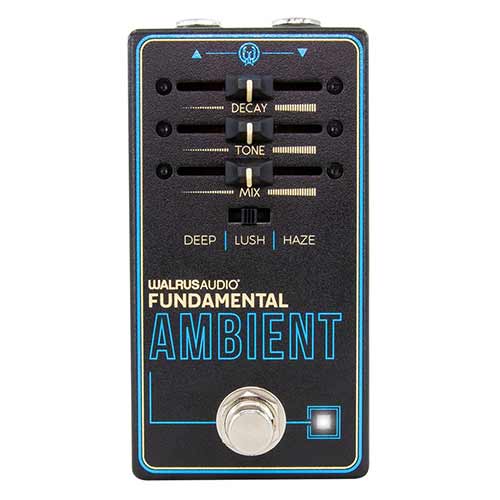
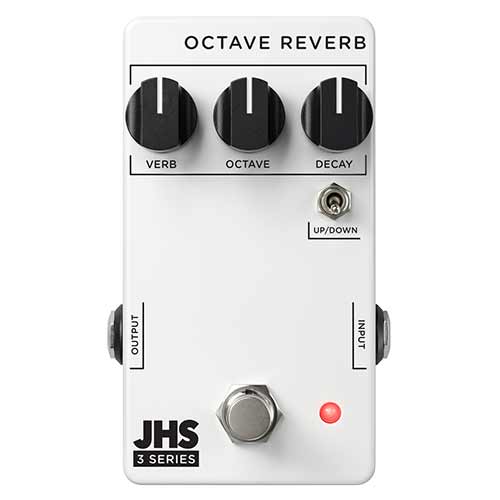

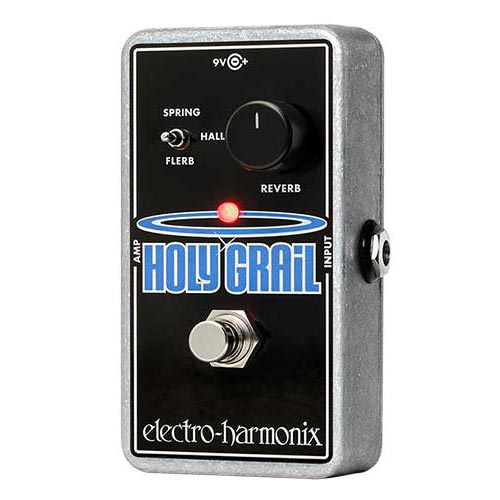
Recommended ambient reverb pedals between 150 and 300 euros
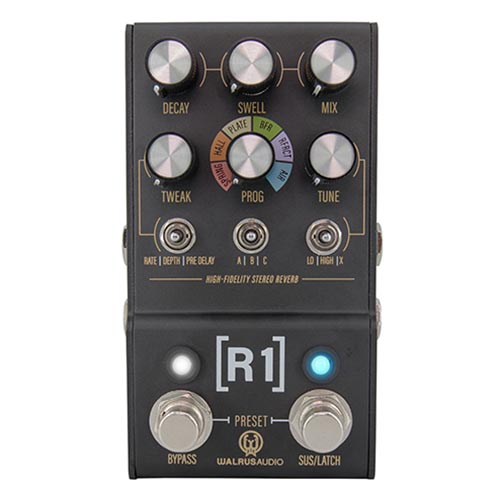
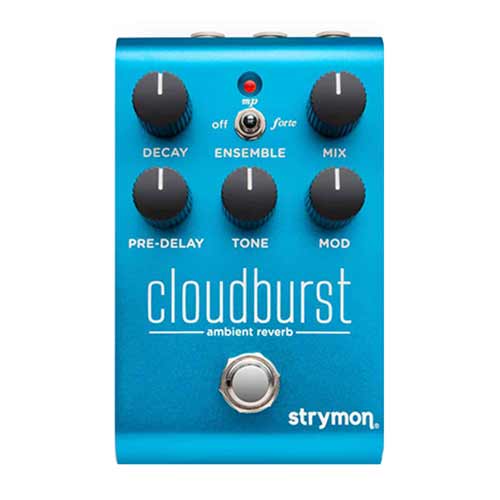

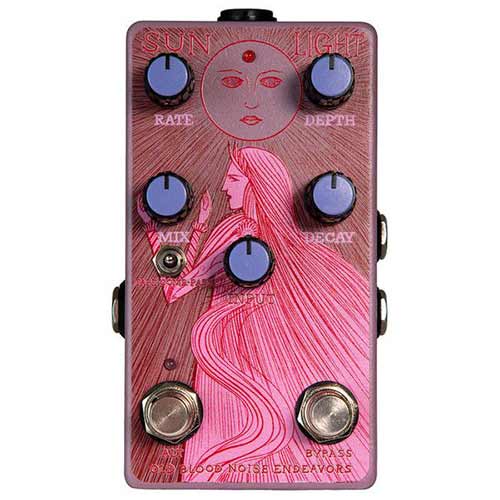
Recommended ambient reverb pedals between 300 and 500 euros
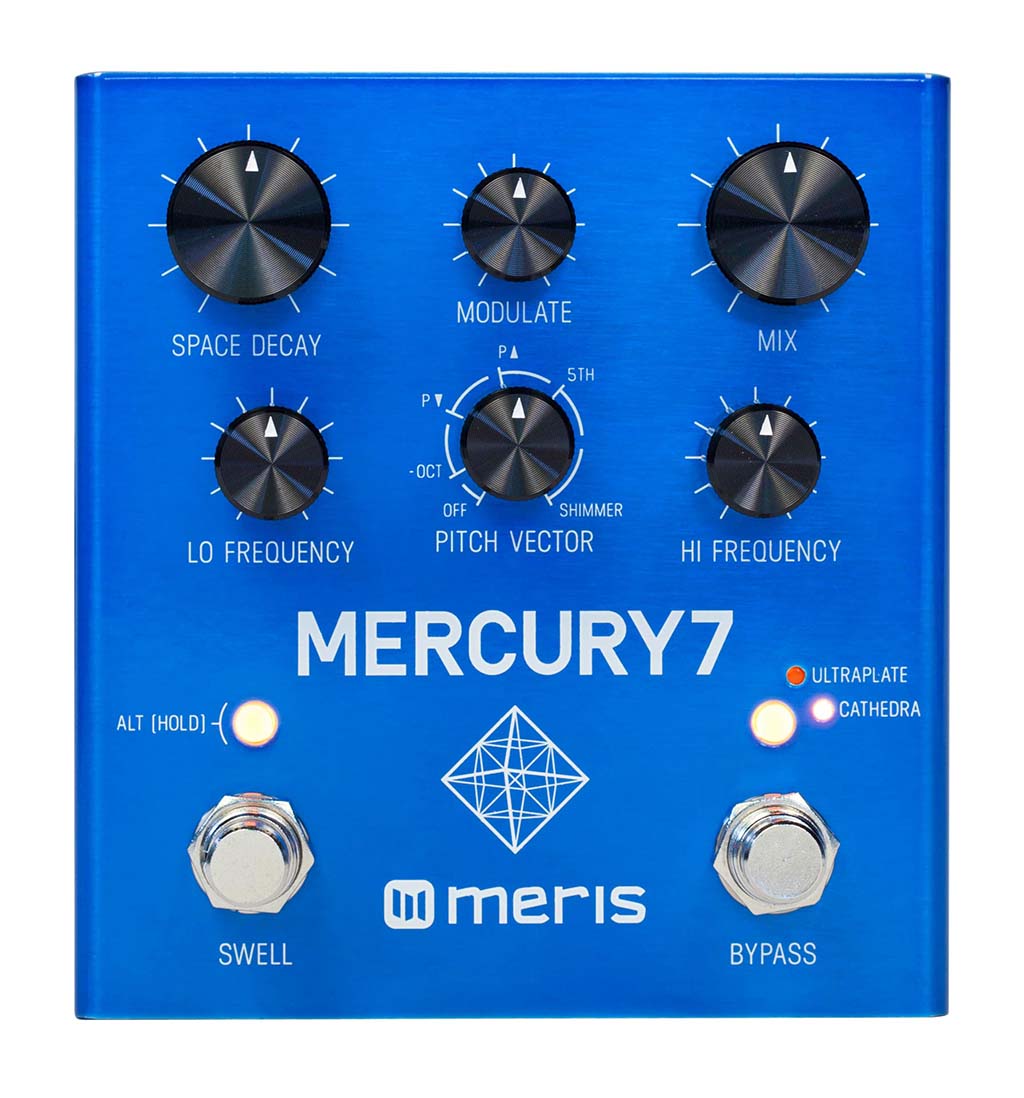
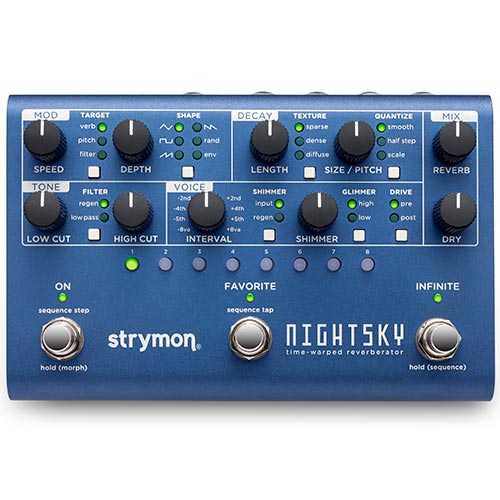
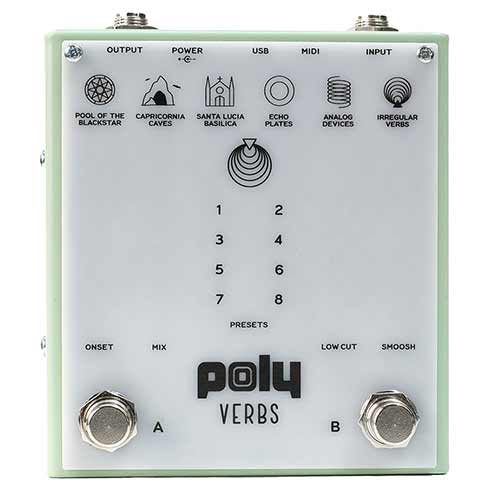

Ambi Space AS-1R
Recommended ambient reverb pedals over 500 euros

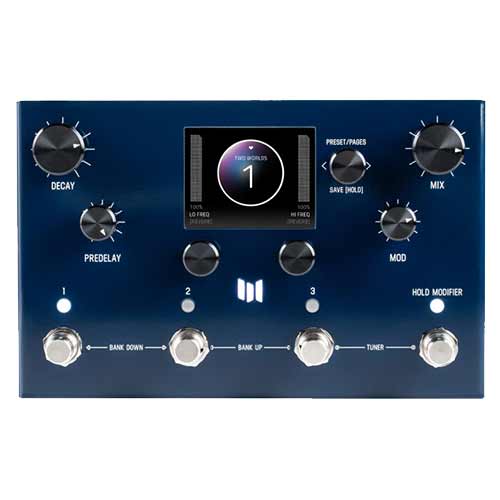

Is your favourite ambient reverb not listed? Then also take a look at our range of reverb pedals on this page.

Leon Keemer is a guitarist, gear nerd, and regular writer for Pedaltown.nl. With a passion for anything that can shape, bend, or improve your sound, he regularly tests new effect pedals—from boutique fuzzes to modern multi-FX. Leon is known for his clear explanations and honest reviews that help both beginners and seasoned guitarists. When he isn’t behind his pedalboard, he experiments in the studio or hunts for obscure effects that make musicmaking just a little bit more exciting.