
Peavey
Showing all 5 resultsSorted by latest
-
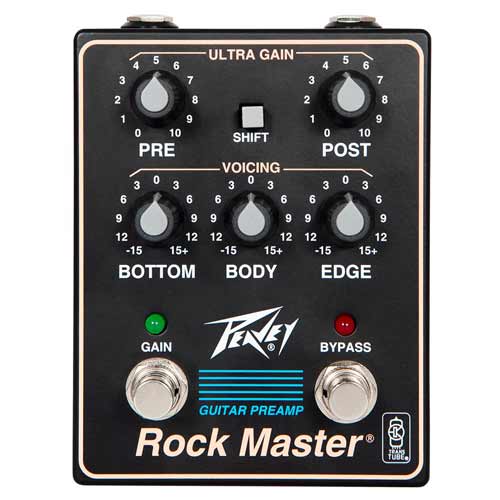
Peavey Rock Master Preamp
€ 190 Add to cart -

Peavey VTM Preamp
€ 190 Add to cart -

Peavey Bandit Supreme Teal Stripe Preamp
€ 190 Add to cart -

Peavey Decade Too Preamp
€ 190 Add to cart -

Peavey Session LTD 400 Preamp
€ 190 Add to cart
Showing all 5 resultsSorted by latest
Peavey
Peavey is a name that’s instantly recognizable to many guitarists and musicians. Known for its durable, affordable, and versatile equipment, the brand has built a solid reputation in the music industry over the decades. While it primarily made its name with amplifiers and PA systems, the company also has a rich history in effects pedals. To gain a good understanding of the brand and its pedals, it’s important to first look at their origins and the philosophy behind their products.
The Origins
The story begins in 1965 in Meridian, Mississippi, where a young musician and electrical engineer named Hartley Peavey decided to combine his passion for music and technology. Disappointed with the quality and especially the high prices of musical equipment at the time, he decided to develop products that were both reliable and affordable. His goal was clear: to build high-quality equipment that was accessible to musicians of all levels, without having to pay top dollar. Parental Home
Parental home
Hartley literally started in his childhood home. With nothing more than a soldering iron, a workbench, and an unparalleled perseverance, he designed and built his first amplifiers. He quickly earned a reputation as someone who could deliver robust and user-friendly equipment. His approach was pragmatic: musicians should be able to rely on their gear, night after night, without it becoming complicated or fragile.
Practical Innovation
This philosophy of practical innovation has always remained a common thread. The company grew explosively in the 1970s and 1980s, expanding to a wide range of products: from guitars and basses to mixing consoles, PA systems, and later digital solutions. But effects pedals also became an important part of the product range early on.
First Steps with Effects Pedals
In the 1970s and 1980s, the effects pedal market began to grow enormously. Manufacturers like Boss, Electro-Harmonix, and MXR dominated the market, but Peavey saw an opportunity to offer pedals that matched their amplifiers in terms of build quality and reliability. Just like with their amps, the goal was to give musicians pedals that were durable, practical, and affordable.
The early pedals often had a sleek design, with sturdy metal housings and a no-nonsense appearance. They were aimed at musicians who used their gear intensively and valued functionality over stylish looks. With this, the company positioned itself slightly differently in the market: the pedals were workhorses, built to perform consistently.