

Amp-in-a-box pedals have become an essential part of the modern pedalboard. Where guitarists once depended on large tube amplifiers, you can now capture that same character in a compact pedal.
This makes the category interesting not only for home use and studio recording, but also for live situations where flexibility and control are important. At its core, it is all about the same idea: recreating both the sound and feel of a guitar amplifier, but without the practical drawbacks of a heavy amp.
What is an amp-in-a-box pedal?
An amp-in-a-box pedal is designed to replicate the full behavior of an amplifier. It is not just about the tone, but also about the way an amp responds to your playing. Think of how a sound starts to break up when you pick harder, or how you can go from clean to crunch using your guitar’s volume knob.
That dynamic response is exactly what sets these pedals apart from traditional overdrive and distortion pedals, which often feel more static. A good amp-in-a-box pedal behaves much more like an extension of your amplifier—or even replaces it entirely. It also means you become less dependent on your amp settings, because a large part of your sound is already built into your pedalboard.
How does an amp-in-a-box differ from overdrive and distortion?
Although the terms are sometimes used interchangeably, the difference is clearly audible and tangible in practice. A classic overdrive is often designed to “push” an amplifier, while an amp-in-a-box pedal tries to be that amplifier itself.
You can hear this in the way the sound is built. Where a standard overdrive often has a fixed tonal character, a good amp-in-a-box pedal responds much more dynamically. It cleans up when you play softer and becomes more aggressive when you dig in harder. This makes it especially interesting for guitarists who shape their sound through their playing style rather than only through knobs.

How do you use an amp-in-a-box pedal?
How you use an amp-in-a-box pedal depends heavily on your setup. Some guitarists use the pedal as the foundation of their sound and go straight into a PA or audio interface. In that case, the pedal functions as a complete replacement for the amplifier.
Others place the pedal in front of a clean amplifier. Here, you use the amp-in-a-box as the tonal foundation while the amplifier mainly serves as a “power platform”. This works particularly well with amps that have plenty of headroom.
A hybrid approach is also possible, where you combine the pedal with other drive pedals. In that situation, the amp-in-a-box acts as the foundation on which you build further with boosts, overdrives or fuzz.
Character and playing feel
What truly sets amp-in-a-box pedals apart is how they feel while playing. They are not simple effects that add a layer of distortion, but dynamic tools that respond to the nuances in your playing.
Play softly and the sound stays open and clean. Pick harder and more drive and compression appear naturally. That interaction makes the pedal “work with” your playing style.
This makes them especially attractive to guitarists who are used to controlling their sound with their hands and their guitar’s volume knob. Instead of a static effect, you get a responsive system that adapts to the way you play.
A flexible foundation for your sound
Whether you play through a traditional amplifier or go fully ampless, amp-in-a-box pedals adapt effortlessly. They can serve as the foundation of your sound, but also as an additional tonal flavor within a larger setup.
Combined with other effects—such as delay, reverb and modulation—they often form the heart of a modern pedalboard. They largely determine your “core tone”, while other pedals work around them.
Because you can choose from different styles, you can shape your sound very deliberately. You are not just choosing a pedal, but essentially an amplifier character that is always available.
Iconic amplifiers in pedal form
Many of these pedals are based on iconic amplifier sounds. You can also see this in the way guitarists search for a specific tone.
If you love clear cleans and subtle breakup, you will quickly arrive at Fender-inspired sounds. These pedals are known for their open character, plenty of headroom and a natural transition into light overdrive.
Recommended Fender in a box pedals

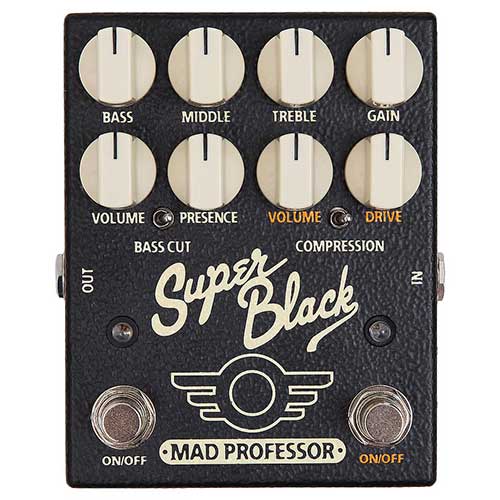
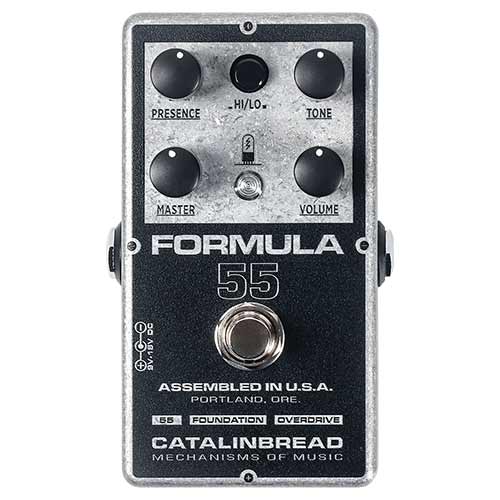
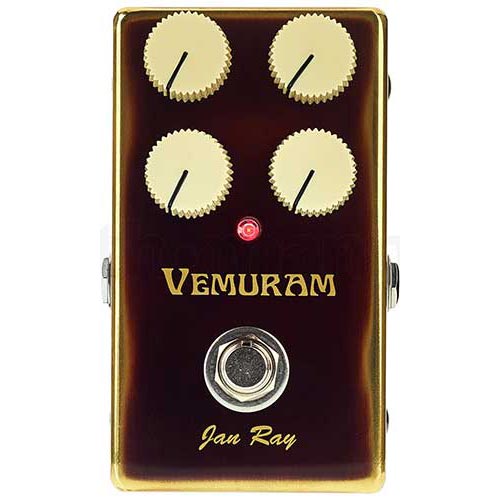
At the other end of the spectrum, you will find the typical British rock sound. More midrange, more compression and a rawer edge that works perfectly for classic rock and heavier riffs.
Recommended Marshall in a box pedals

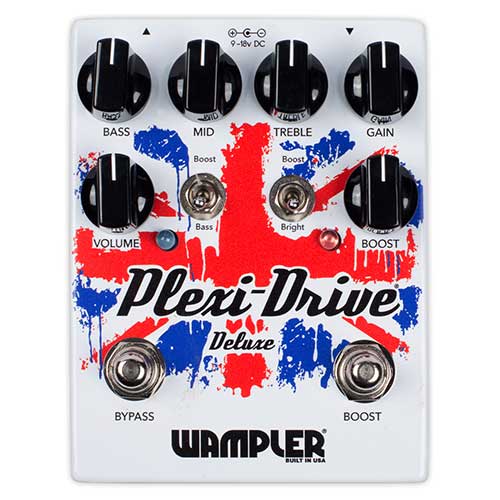


For fans of Vox amplifiers, such as the classic AC15 and AC30, there are also excellent options. These amplifiers are known for their sparkling top-end, often described as chime. Especially at clean settings, you hear a lot of detail and definition, even with complex chords. This makes Vox particularly popular for rhythm playing and jangly sounds.
Recommended Vox in a box pedals

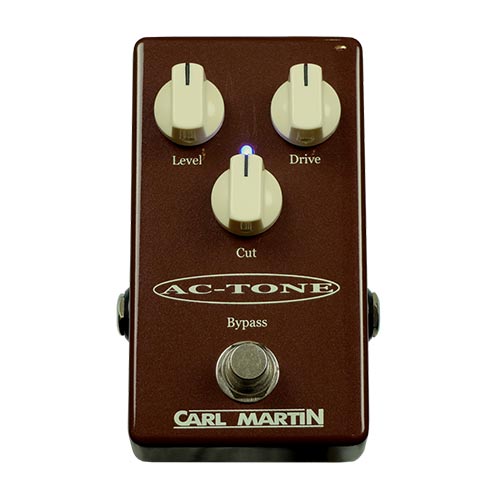
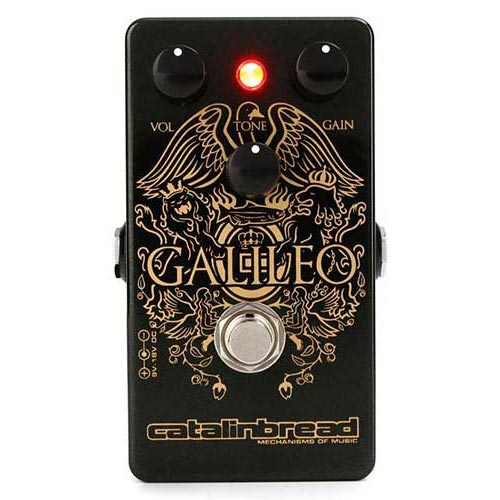

For guitarists looking for even more nuance and dynamics, there are Dumble-inspired pedals. These are known for their rich harmonics, smooth compression and an almost “vocal” lead tone.
Recommended Dumble in a box pedals

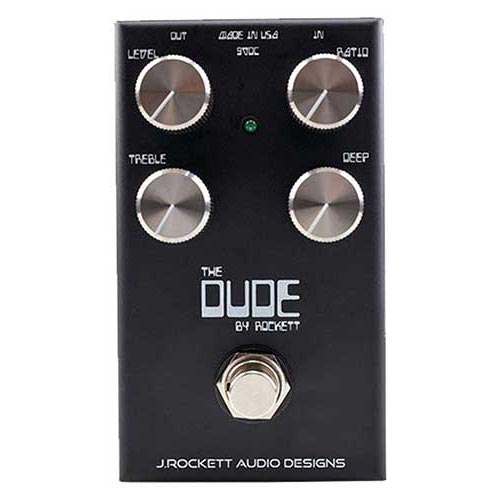
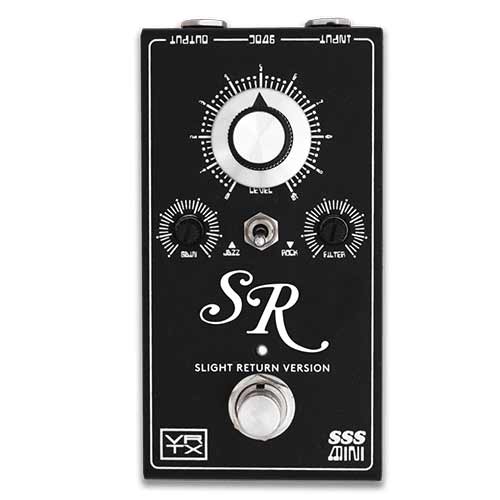

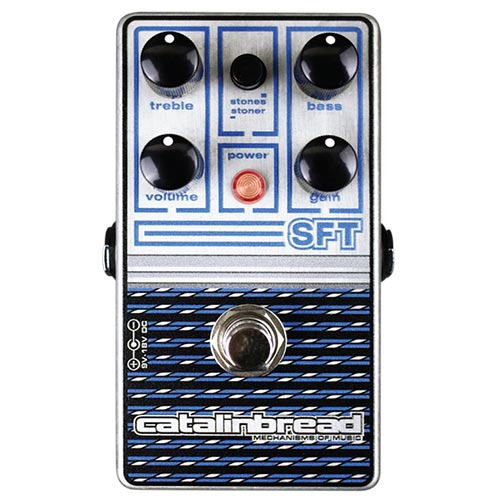
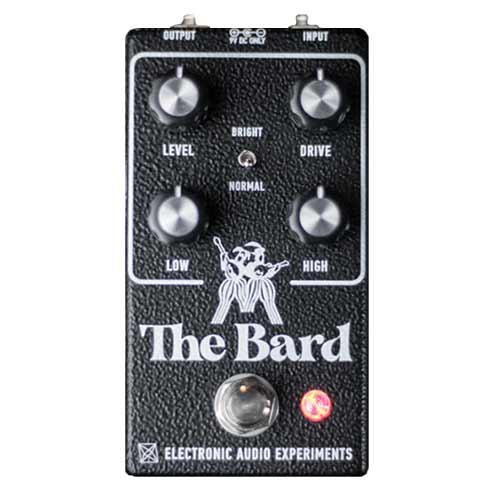
There are also pedals based on less common amplifiers, such as the Orama by Crazy Tube Circuits, which is based on a British Orange OR120 amplifier. Electronic Audio Experiments also offers a wide range of pedals based on more exotic amplifier designs.
Recommended Other amp in a box in a box pedals


Modern solutions: playing without an amplifier
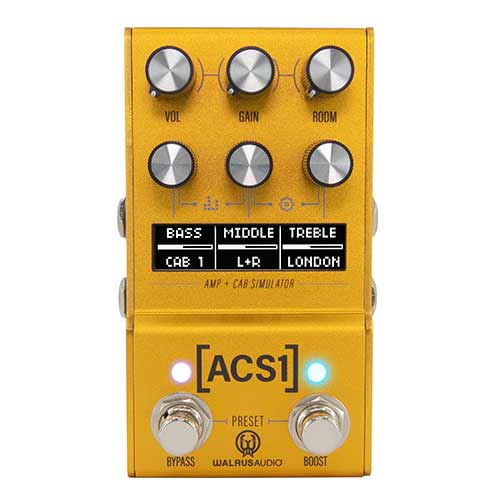
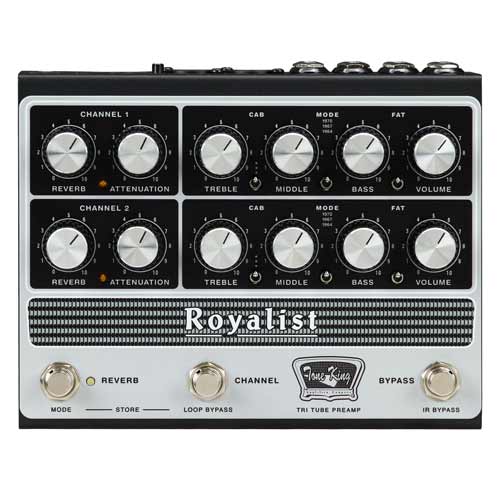
In recent years, there has been a clear shift toward pedals that simulate not only the amplifier, but also the speaker cabinet. This allows you to play completely without a traditional amp.
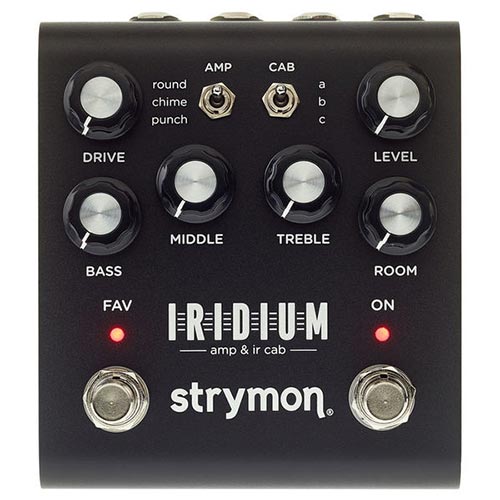
A good example is the Strymon Iridium. This pedal combines multiple amplifier types with high-quality cabinet simulations, allowing you to record directly or go straight to the PA without additional equipment. For many guitarists, this means a huge simplification of their setup.
These types of pedals make it possible to build a complete rig on your pedalboard without being dependent on a specific amplifier, microphone or room. Especially in live situations where you go directly into the PA, this is a major advantage.
Recommended modern pedals

Conclusion
Amp-in-a-box pedals form the bridge between classic amplifiers and modern flexibility. They allow guitarists to achieve iconic tones without the limitations of traditional amps.
Whether you choose a modern solution or a more character-focused approach, you are essentially bringing home a complete amplifier in pedal form. And that is exactly what makes this category so compelling: you are not just building a pedalboard, you are creating your own portable amplifier.

Leon Keemer is a guitarist, gear nerd, and regular writer for Pedaltown.nl. With a passion for anything that can shape, bend, or improve your sound, he regularly tests new effect pedals—from boutique fuzzes to modern multi-FX. Leon is known for his clear explanations and honest reviews that help both beginners and seasoned guitarists. When he isn’t behind his pedalboard, he experiments in the studio or hunts for obscure effects that make musicmaking just a little bit more exciting.